Bloor West Village is a west-end Toronto shopping district and surrounding residential area centred on Bloor Street West, home to more than 400 independent shops, restaurants and services. It is best known as the birthplace of the Business Improvement Area, a made-in-Toronto idea that has since inspired similar business improvement districts around the world. For buyers, it is one of the few pockets where you can own a century home on a tree-lined street, walk your kid to school, grab a butcher-cut steak on the way home, and still be on the subway platform in a few minutes.
That combination is exactly why agents and locals call it a Small Village in A Big City. You get the main-street feel of a town an hour outside the GTA, with Line 2 running underneath it and High Park sitting at the eastern edge. Here is what the Bloor West Village area is really like, from the housing stock and commute times to the schools, the festivals and the day-to-day amenities that keep people here for decades.
Thinking about making a move here? Browse featured listings across Toronto and the GTA or book a free home evaluation to see where you stand before you start shopping.
Overview of Bloor West Village Toronto

Image Credit: Canmenwalker – Own work, CC BY 4.0/Wikimedia Commons
Bloor West Village is the name locals use for the shopping district along Bloor Street West and the residential streets around it, and it does not line up neatly with any single municipal boundary. The City of Toronto identifies the adjacent residential neighbourhood as Runnymede-Bloor West Village, bounded roughly by Jane Street to the west, Runnymede Road to the east, the CPR rail corridor to the north and Bloor Street West to the south. The Bloor West Village BIA itself is wider than that, and the Bloor West Village Residents Association notes it spans parts of Lambton Baby Point, High Park-Swansea, Runnymede-Bloor West Village and High Park North.
That distinction matters when you are house hunting, because two listings a few blocks apart can sit in different official neighbourhoods with different comparables. In everyday use, people simply say Bloor Street is the Village and the quiet blocks north of it are Runnymede. If you are comparing options, it is worth reading our profiles of Swansea and Runnymede alongside this one.
History of the Bloor West Village Area
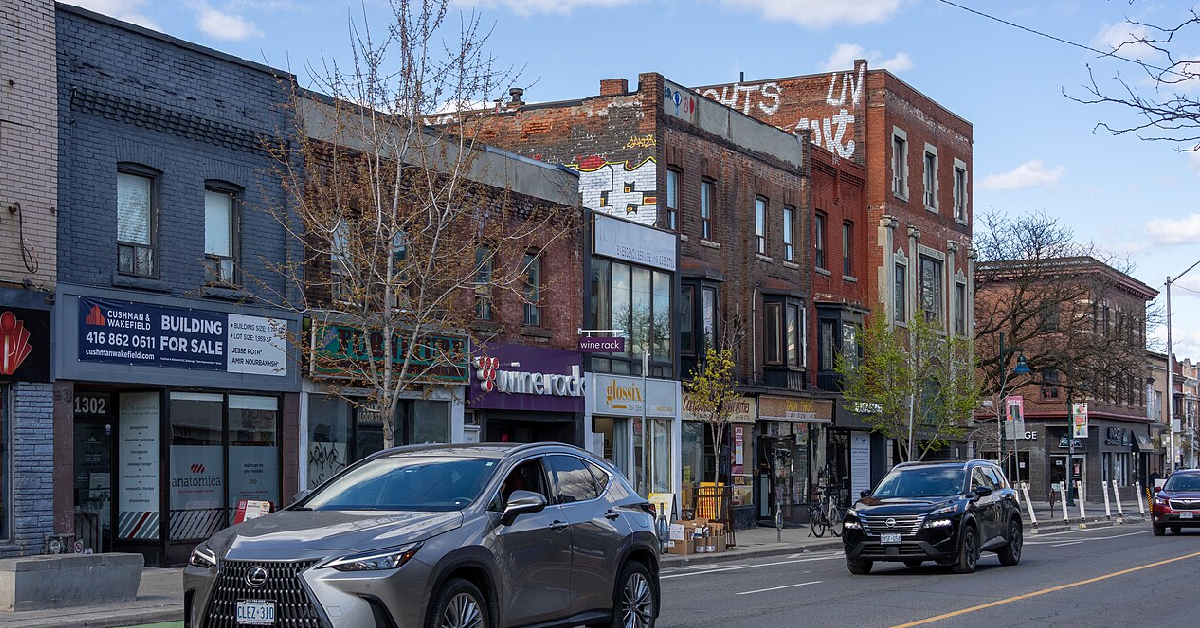
Image Credit: Dillan Payne – CC BY-SA 4.0/Wikimedia Commons
Development in the Bloor West Village area started in the late 1800s, when the Toronto Suburban Railway pushed a line through the north end of the West Junction and the surrounding land was carved into lots for sale. Growth accelerated after the City of West Toronto was annexed by the City of Toronto in 1909 and the Bloor West streetcar was extended to Jane Street in 1921. The strip took its modern shape after Line 2 opened in 1968, when shoppers who once rode the streetcar along Bloor began travelling underneath it and foot traffic on the street dropped off.
Local merchants responded by asking the City and the Province for legislation allowing a levy on area businesses to fund streetscape and promotional work. According to the Bloor West Village BIA and the Ontario Heritage Trust plaque on Runnymede Road, the City accepted the application in September 1970 and the area became the first designated Business Improvement Area, a model later adopted across Toronto and internationally through the Toronto Association of Business Improvement Areas. Early BIA spending went into lights in the trees, flower boxes and benches, shoppers came back, and the City began studying the strip as a potential Heritage Conservation District in 2017.
What Is Bloor West Village Most Famous For?
Bloor West Village is most famous for being the site of the world’s first Business Improvement Area, but visitors come for the high street itself, the heritage buildings, the September Ukrainian Festival and the parkland on its doorstep. The seven spots below are the ones that define the neighbourhood for residents and day-trippers alike. Together they explain why this Small Village in A Big City punches so far above its size.
Most of these are reachable on foot or by a short transit connection from Jane or Runnymede stations, though the Humber trails and Swansea Town Hall sit closer to the western and southern edges. Locals tend to string two or three together on a weekend. Here is what to see and what you can actually do at each.
1. The Bloor Street West High Street
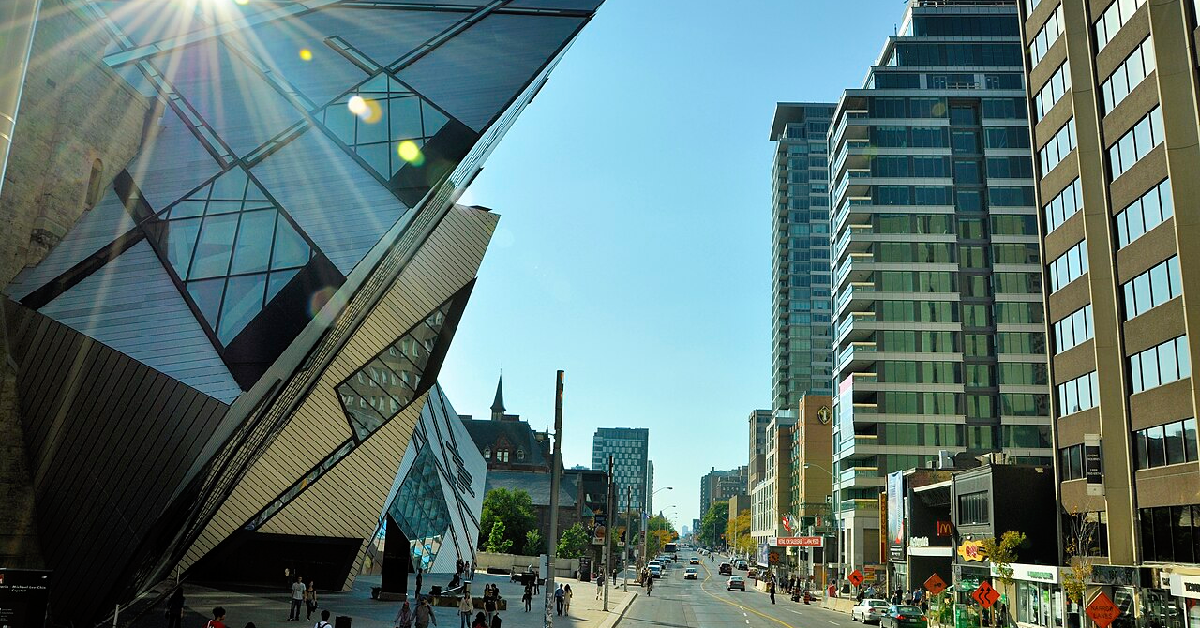
Image Credit: Bodyalive NJ – CC BY 2.0/Wikimedia Commons
The commercial strip is the neighbourhood’s main event, with more than 400 shops, restaurants and services along both sides of Bloor. European delis, butcher shops, cheese counters, fishmongers, bakeries and produce stands have served the same families for generations. Visitors can spend an afternoon working east from Jane Station, stopping for coffee, browsing independent boutiques and picking up bread or pastries to take home. Sidewalk sales, seasonal decorations and streetscape planting are handled by the BIA, so the strip stays cared for year-round.
2. The Runnymede Theatre Building
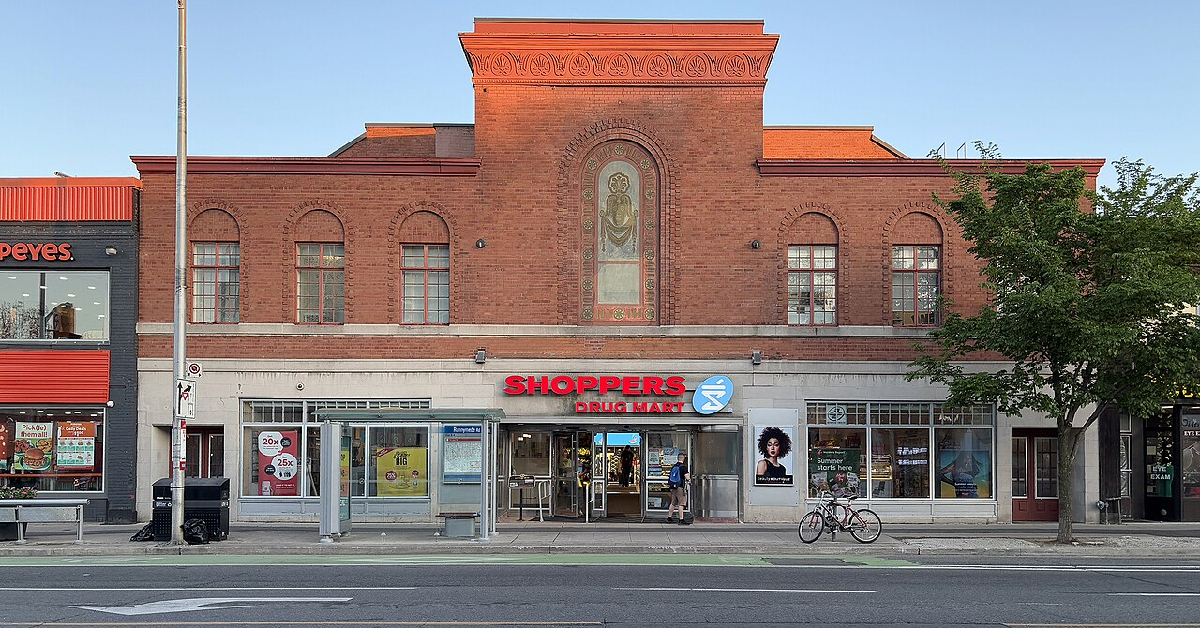
Image Credit: Canmenwalker – CC BY 4.0/Wikimedia Commons
The Runnymede Theatre at 2223 Bloor Street West was built in the late 1920s and has since operated as a vaudeville house, a movie theatre, a bingo hall, a Chapters bookstore and now a Shoppers Drug Mart. The building is designated under Part IV of the Ontario Heritage Act, and its original atmospheric interior included a ceiling designed to look like an open sky. Significant heritage elements remain visible from the retail floor, so you can walk in for toothpaste and still look up at the proscenium and ceiling detail. It is one of the few places in Toronto where a heritage picture palace is still doing daily business.
3. High Park
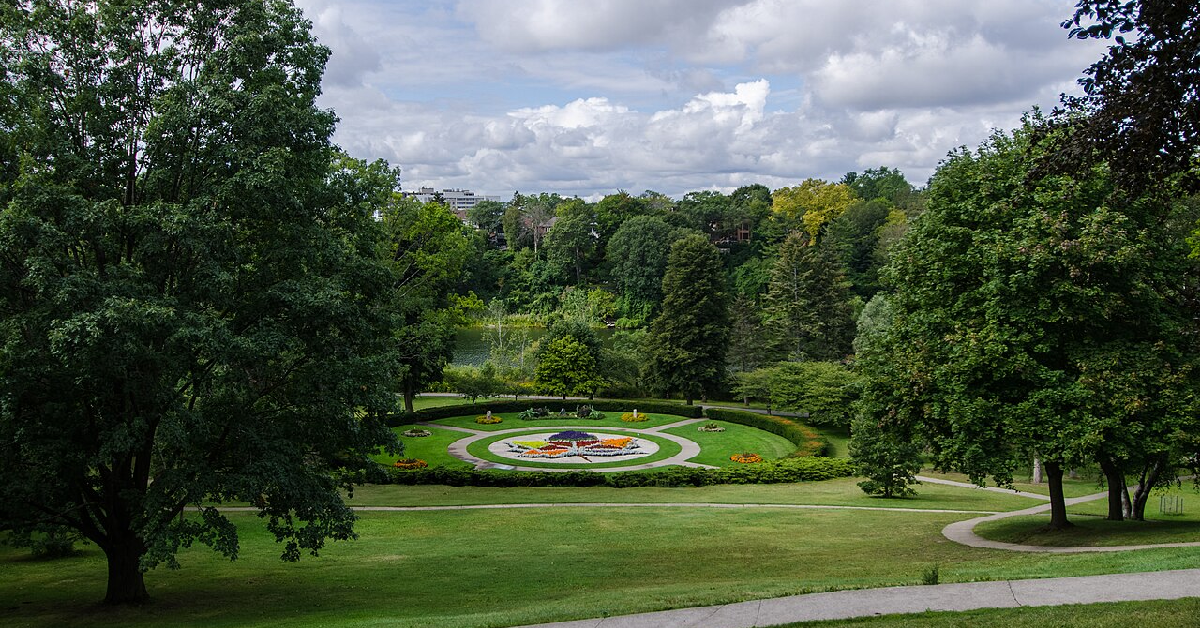
Image Credit: Jeff Hitchcock – CC BY 2.0/Wikimedia Commons
High Park sits immediately east of the neighbourhood and is Toronto’s largest public park at roughly 400 acres, holding hiking trails, Grenadier Pond, sports fields, a zoo, an off-leash area and the Sakura cherry blossom grove. Visitors can walk the trails, picnic by the pond, catch a summer performance at the outdoor amphitheatre or bring kids to the castle-style playground. Because it borders both Bloor West Village and Swansea, you can enter from the north and come out near the lake. Our guide to living in High Park Toronto covers the area in more detail.
4. Toronto Ukrainian Festival

Image Credit: Andrew Scheer – CC0/Wikimedia Commons
The Toronto Ukrainian Festival runs over three days each September. The 2026 edition is scheduled for September 18 to 20. Bloor Street West closes to traffic between Jane Street and Kennedy Park Road for the weekend, with a Festival Stage at the Jane end and a Community Stage at the Runnymede end. Visitors can eat their way through perogies, cabbage rolls and baked goods, watch traditional dance troupes, catch the Saturday parade and shop vendor tables along the closed roadway. Admission is free, and the festival organisers ask visitors to arrive by TTC because most surrounding streets permit parking only.
5. Runnymede Public Library

Image Credit: Secondarywaltz – CC BY-SA 3.0/Wikimedia Commons
The Runnymede branch of the Toronto Public Library on Bloor Street West is a neighbourhood institution and a designated heritage building, designed by John Lyle, the architect behind Union Station. Beyond borrowing, residents use it for children’s programming, book clubs, seniors’ sessions and community meetings. It also works as a quiet weekday workspace for the many people here who work from home. The nearby Annette and Swansea Memorial branches round out library access for the area.
6. Swansea Town Hall Community Centre

Image Credit: GTD Aquitaine – Public Domain/Wikimedia Commons
Just south of the strip, Swansea Town Hall is the former municipal hall of the Village of Swansea, which stayed independent until it joined Toronto in 1967, and now runs as a community centre managed by a volunteer board. Residents use it for fitness classes, art programs, preschool sessions, seniors’ clubs and rentals for parties and meetings. Visitors can drop in for seasonal craft sales and community events posted on the local calendar. It is a short walk from the south side of Bloor, closer to Runnymede Road than to Jane Street.
7. The Humber River and Lower Humber Trails
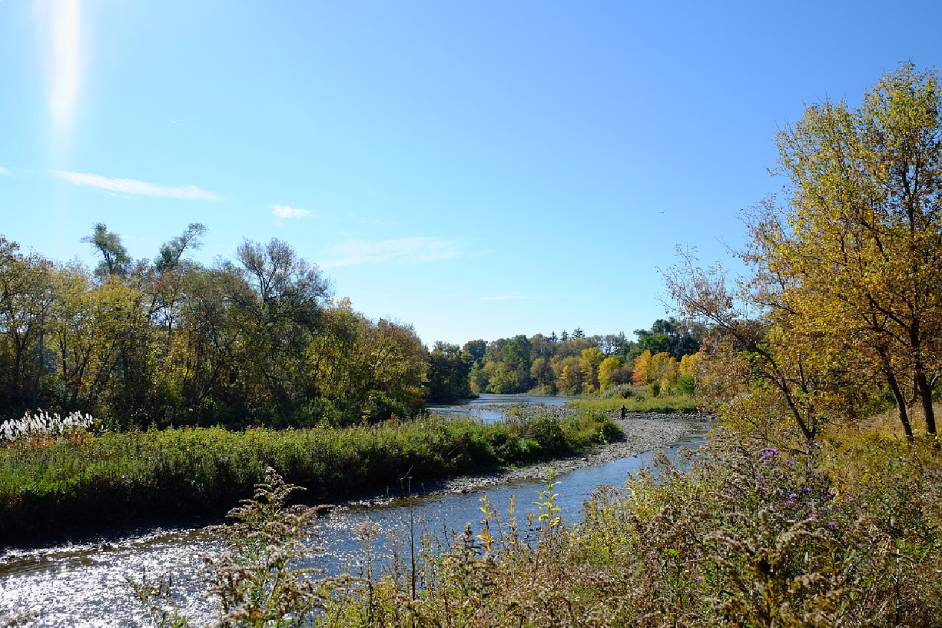
Image Credit: Peter Balcerzak – CC BY-SA 2.0/Wikimedia Commons
The Humber River valley connects to a network of multi-use trails running north toward Lambton and south toward the waterfront. The valley is a designated Canadian Heritage River and one of the better cycling corridors in the west end, and you can be in the ravine minutes after leaving the west end of Bloor Street. Visitors can cycle, jog or walk the trail, watch for herons and fall salmon runs, and ride to the lake without fighting traffic. Access points near South Kingsway and Old Mill make it easy to jump on, and our roundup of the best Toronto outdoor spaces and parks covers more options.
Real Estate in Bloor West Village
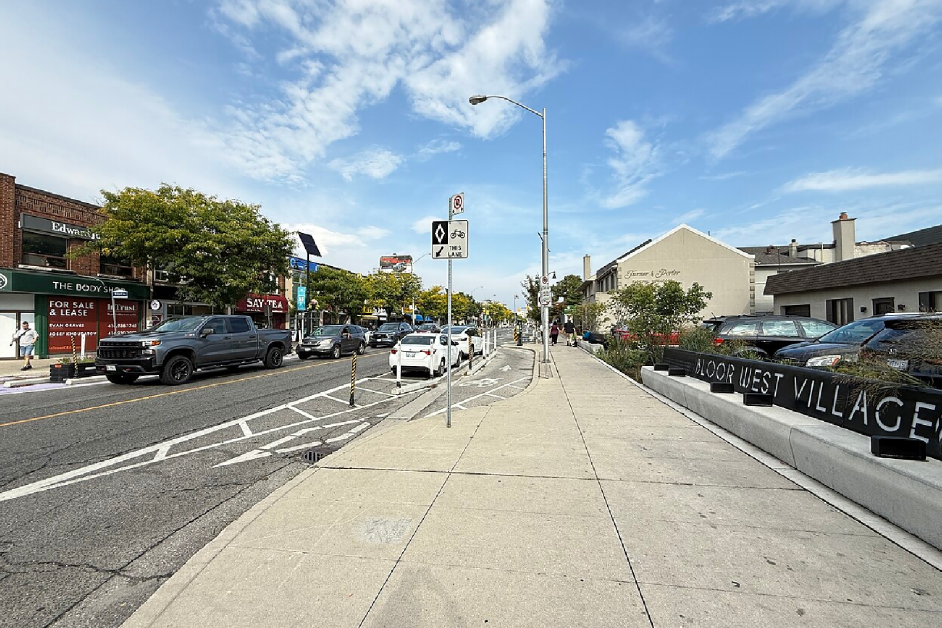
Image Credit: EclecticEnnui – CC BY-SA 4./Wikimedia Commons
The neighbourhood is essentially built out, with limited redevelopment opportunity on the interior streets, which shapes almost everything about how it trades. Listings for Bloor West Village homes for sale are drawn from a fixed pool of character housing, and well-located properties can be highly competitive depending on condition, lot and current market conditions. Buyers should treat pricing here as street-by-street rather than neighbourhood-wide.
Anyone looking at condos or Bloor West Village apartments will mostly find low-rise and mid-rise buildings, plus the residential units built above the retail on Bloor itself. Tenants searching Bloor West Village apartments for rent often land in those above-store units, purpose-built walk-ups on the side streets, or basement and second-floor suites in converted houses. Purpose-built rental stock is limited, so it pays to have financing, credit and references sorted before you view.
Properties near transit and High Park often attract strong buyer interest, though the premium any individual home commands depends on its condition, frontage, street and the market at the time. Before you set a budget, run the numbers with our mortgage calculator and land transfer tax calculator, since Toronto buyers pay both municipal and provincial land transfer tax. Current sales data is published by the Toronto Regional Real Estate Board and is worth checking before you form a view on pricing.
What Homes Are Like in Bloor West Village
The housing stock is dominated by detached and semi-detached homes built roughly between 1905 and 1940, with Edwardian, Tudor Revival and Arts and Crafts detailing on deep lots. Brick is the default, most homes carry three or four bedrooms, and many have been renovated at least once behind an original facade. Lot frontages vary noticeably from street to street, which is one reason comparables here need local reading.
Buyers should budget for the realities of century housing. Depending on the property, that can include older wiring, clay drains, single-car or mutual drives, and basements that may require waterproofing, structural work, or underpinning before major renovations. Detached garages off rear lanes are common on some streets and absent on others. A thorough inspection matters more here than in newer parts of the GTA.
Ready to start looking? Set up a custom property search so new listings in the area land in your inbox first, and read the Buyer’s Guide before you write an offer.
Transportation and Connectivity
Line 2 Bloor-Danforth runs directly under the neighbourhood with two stations, Jane and Runnymede. From either station, downtown destinations are generally reachable by subway in roughly 20 to 30 minutes depending on your exact starting point, destination and transfers, and the TTC trip planner is the best way to check your own commute. Surface routes connect north to Dundas West and St. Clair and south toward the Queensway and the lake.
For drivers, the Gardiner Expressway is accessible via South Kingsway, and Highway 427 is a short run west along the Queensway for airport or Mississauga trips. Most residential blocks operate on permit parking, and Bloor itself is metered with Green P lots tucked behind the strip. Expect the usual Toronto reality: getting out is easy, getting back in at 5:30 on a Friday is not.
Walkability is the real selling point. Groceries, pharmacy, banking, dentists, schools and transit sit within a few blocks, which is why the area shows up on most lists of the best walkable neighbourhoods in the GTA. Cyclists get the Humber trail network to the west and High Park paths to the east.
Community and Events
The community calendar here is unusually full for an area this size, and much of it is run by the BIA and local volunteer groups rather than the City. The Toronto Ukrainian Festival in September is the headline event, with a July street festival, a Halloween festival on the residential streets, Santa in the Village and participation in the citywide Cavalcade of Lights filling out the year. Check the BIA calendar for current dates, since programming changes year to year.
The demographic profile skews toward families, with a large share of residents in the 30 to 49 range and a significant population of children and teenagers. Ukrainian, Polish and British heritage all show up strongly in the local businesses and places of worship. Residents’ associations here are active on planning and development files, which is worth knowing if you are buying with renovation or severance plans.
Dining and Entertainment Scene
Bloor West Village restaurants skew independent rather than chain, a direct result of the BIA’s long focus on small business. You will find Ukrainian and Eastern European kitchens, Italian trattorias and pasta cafés, Greek and Middle Eastern spots, sushi, pubs, brunch rooms and a strong bench of bakeries and coffee roasters. In our experience walking the strip, you pay a little more here than at comparable spots further west, which regulars accept as the cost of a real main street.
For entertainment, the Village Playhouse hosts community theatre productions through the season, and several cafés and pubs along Bloor run live music nights. High Park’s outdoor amphitheatre adds summer programming a few minutes east. If you are exploring the wider west end, our guides to the best coffee shops and cafés in Toronto and The Junction are worth a read.
Shopping and Local Amenities
Day-to-day shopping is done on foot along Bloor, where independent grocers, butchers, fishmongers, bakeries, cheese shops and delis still hold much of the frontage. Add pharmacies, hardware, dry cleaners, tailors, salons, banks and specialty gift and clothing shops and you have a strip that covers most errands. Big-box runs mean a drive to Stockyards or the Queensway.
Pet owners are well served, with the Bloor West Village animal hospital on Bloor Street West offering wellness exams, diagnostics and surgical care, alongside other veterinary clinics in the surrounding west end. Groomers, pet supply shops and the off-leash areas in High Park round out the picture. Amenities like these matter more than buyers expect, because they are what make a walkable neighbourhood actually function.
Job Opportunities
Most residents commute rather than work locally, and the subway puts downtown employment districts within a typical 20 to 40 minute ride depending on destination and transfers. Local employment itself is concentrated in retail, food service, professional offices, healthcare and other small businesses along the Bloor corridor. Medical, dental, legal and accounting practices operate out of the commercial buildings near both subway stations.
For self-employed residents and remote workers, the area works well because the daytime infrastructure is already here: cafés with wifi, library branches, and clients reachable by transit across the city. Small business ownership is a genuine path here too, given how much of the strip is independently operated. Storefront availability is tight, so most entrepreneurs watch listings closely or take over an existing lease.
Education in Bloor West Village
Families in and around the neighbourhood may have access to schools such as Runnymede Junior and Senior Public School, Humbercrest Public School, King George Junior Public School, Humberside Collegiate Institute and Runnymede Collegiate Institute, depending on their exact address and program eligibility. Humberside dates back to 1892 and has a long academic reputation in the west end. Catholic schools, private options and alternative programs also serve the area, with French Immersion and International Baccalaureate streams available at some locations.
School catchments in Toronto are address-specific, and neighbourhood boundaries do not determine eligibility. Always confirm the current catchment and program placement for a specific property with the Toronto District School Board and the Toronto Catholic District School Board before you buy, because boundaries and optional attendance policies change. For post-secondary, students have subway access to U of T, TMU, George Brown and Humber’s Lakeshore campus.
Healthcare in Bloor West Village
Primary care is handled by family practices and walk-in clinics along Bloor Street West, with several clustered in the commercial and medical buildings near Jane and Runnymede stations. The Toronto West Professional Centre at 2425 Bloor Street West is one of the larger medical buildings serving the area and houses multiple practices. Among them is the Bloor West Village women’s clinic, an all-female practice providing reproductive health and miscarriage management services, with OHIP coverage applying to eligible patients and services.
For hospital care, St. Joseph’s Health Centre on the Queensway is the closest full-service hospital, with Toronto Western also within reach by transit. Dental, physiotherapy, optometry and mental health practices are spread along the strip, and pharmacy access includes the Shoppers Drug Mart inside the former Runnymede Theatre. Services and hours change, so confirm current offerings directly with any provider before relying on them.
Is Bloor West Village a Good Place to Live?
Bloor West Village is widely regarded as one of Toronto’s strongest family neighbourhoods, because it combines subway access, established schools, large parkland and a walkable independent main street in one small footprint. Residents tend to stay for a long time, which is both the appeal and the reason inventory stays tight. The neighbourhood suits people who want city access without city density on their own street.
The honest trade-offs are price, age of housing and parking. Century homes carry maintenance and renovation costs that newer suburban stock does not, permit parking limits how many cars a household can realistically keep, and the blocks immediately fronting Bloor carry traffic and evening noise. None of that puts buyers off, but it should shape which street you target and what you budget for after closing.
Who Is Bloor West Village Best Suited For?
- Families who want walkable schools, parks and daily amenities in one place
- Downtown commuters who would rather ride Line 2 than drive the Gardiner
- Buyers seeking established character housing rather than new construction
- Renters who value transit access and are comfortable with smaller, older units
- Walkability-first buyers who want to live without a second car
- Downsizers staying in the west end who still want a real main street nearby
It is a weaker fit for buyers who need multiple parking spots, want a new build with warranty coverage, need a large modern floor plan on a budget, or are not prepared for the upkeep that comes with a 90-year-old house.
Final Thoughts
Bloor West Village works because the pieces fit together rather than because any single piece is spectacular. The subway gives you the city, the high street gives you daily life within walking distance, and the residential streets behind Bloor stay quiet through all of it. That balance is rare in Toronto and it is why people who buy here tend to stay.
If you are weighing this area against others in the west end, focus on inventory, street-level differences and timing rather than headline prices alone. Listings are limited, competition on well-located homes is real, and the difference between a smooth purchase and a frustrating one usually comes down to preparation. Get your financing, your search criteria and your agent lined up before the right property comes up.
Finding the Right Real Estate Agent in Bloor West Village
When you are comparing Bloor West Village with nearby neighbourhoods, local expertise becomes especially useful for evaluating streets, official boundaries, school eligibility, housing conditions and pricing. The right agent here knows which blocks are permit-parking only, how units above the strip actually trade, and what a properly renovated Edwardian should be worth against one that only looks renovated. That knowledge matters most when inventory is tight and offers nights get crowded.
Frank Leo & Associates has been selling across Toronto and the GTA for more than 30 years and has ranked as the number one RE/MAX team in Toronto and the GTA based on listings sold. Sellers can use the Guaranteed Home Selling System, backed by Frank’s guarantee that your home or condo sells or he will buy it. Buyers get listing access, catchment guidance and offer strategy through the Buy With Confidence program, and you can read what past clients have said or meet the team before you reach out.
Ready to make a move in the Bloor West Village area? Contact Frank Leo & Associates or call (416) 917-5466 to talk through your options, or request your free home evaluation today.