If you’re a Toronto buyer who’s been fighting bidding wars in the 416 and finally looking past the 407, Caledon should be top of your list. It’s the biggest municipality in the Region of Peel by land area, most of it protected greenbelt, and the Rich Outdoor Recreation of Caledon Ontario is genuinely the reason people move here. Rolling farmland, the Niagara Escarpment running straight through, Bruce Trail sections, ski hills, badlands, waterfalls, and conservation lands within a 20-minute drive of every neighbourhood, this is exactly the kind of place buyers fall for the moment they see it in person.
Overview
Caledon sits in the northwest corner of the Region of Peel, right beside Brampton to the south and Dufferin County to the north. The town covers 688.82 square kilometres, which makes it one of the largest municipalities by land area in the entire GTA, with a 2021 population of 76,581 and 15.2% growth since 2016. Most of that population is concentrated in three main centres: Bolton (26,795), Caledon East (5,775), and Palgrave, with the rest spread across rural hamlets like Alton, Belfountain, Cheltenham, Inglewood, and Terra Cotta.
For buyers out of the 416 or Mississauga, the pitch is simple: acreage, privacy, and the Rich Outdoor Recreation of Caledon Ontario, all inside 50 kilometres of downtown Toronto. Median household income sits at $133,000 per the 2021 census, well above the provincial average, which reflects the executive-buyer profile that dominates the market here. Frank Leo has a full Caledon community profile if you want a deeper read on neighbourhoods and history.
History
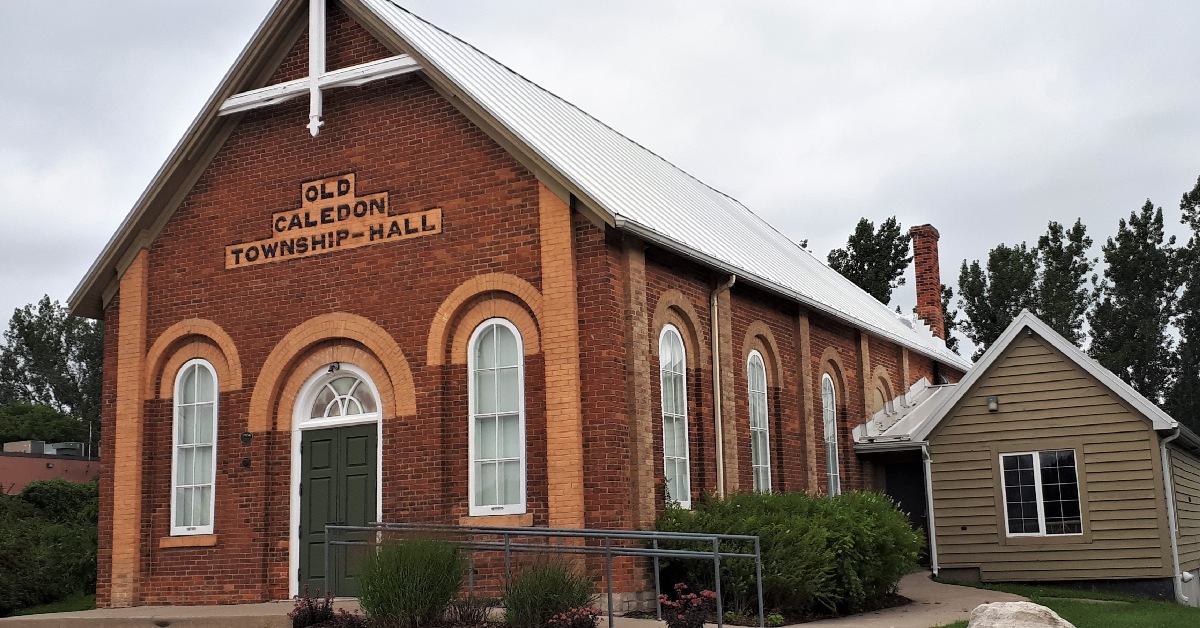
Image Credit: Wikipedia
Caledon was formed on January 1, 1974, when the Province amalgamated the villages of Bolton and Caledon East, the townships of Albion and Caledon, and the northern half of Chinguacousy Township into a single municipality. Before amalgamation, the region had been settled since the 1820s by European farmers on land that formed part of the Ajetance Purchase of 1818. Bolton itself was originally called Bolton Mills, founded around 1822 when James Bolton helped build a flour mill on the Humber River.
The area has been home to Indigenous groups for thousands of years, including the Wendat (Huron), Tionontati (Petun), Haudenosaunee, and Anishinaabeg peoples, along with the Mississaugas of the Credit First Nation whose traditional territory this is. The Rich Outdoor Recreation of Caledon Ontario today sits on landscapes that communities used for travel, trade, and settlement for generations before European arrival. That layered history is why the town is dotted with heritage buildings, old mill sites, and preserved conservation lands that connect right back to the original settlement pattern.
What is Caledon Most Famous For?
The Rich Outdoor Recreation of Caledon Ontario is what puts this town on almost every “best of Ontario” list, and the range is genuinely impressive. From the red rolling hills of the Cheltenham Badlands to the 72-kilometre Caledon Hills section of the Bruce Trail, Caledon packs some of the province’s most-visited outdoor destinations into one municipality. Here are seven of the standouts every Toronto buyer should know about.
Cheltenham Badlands
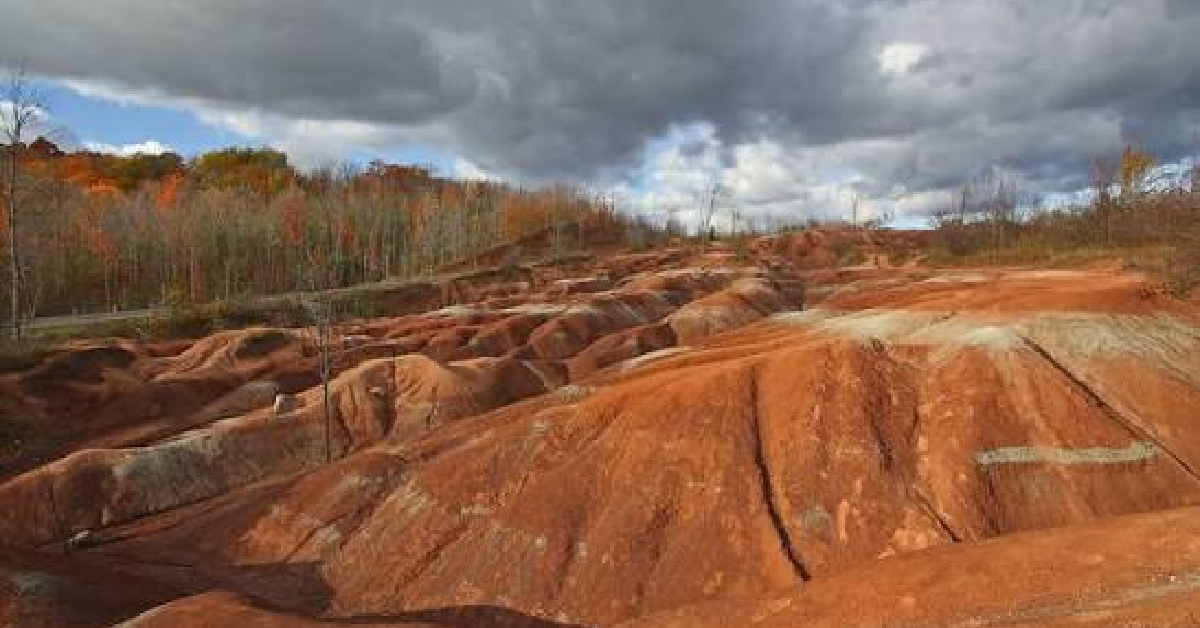
Image Credit: The Canadian Encyclopedia
The Cheltenham Badlands is one of the best examples of Badland topography in Ontario, with exposed Queenston Shale deposited over 445 million years ago and eroded into distinctive red hummocks after early-1900s land clearing removed the topsoil. It sits at 1739 Olde Base Line Road and is owned by Ontario Heritage Trust, with the Caledon Hills Bruce Trail Club maintaining the trails. Visitors need to reserve a vehicle permit through Ontario Parks in advance, which keeps traffic manageable from May to mid-November.
Forks of the Credit Provincial Park

Image Credit: Richard apple – CC BY-SA 3.0/Wikimedia Commons
Forks of the Credit sits inside the Niagara Escarpment biosphere and is one of the marquee outdoor destinations in Caledon, featuring the Credit River, a waterfall, and the famous Devil’s Pulpit viewpoint. The park connects directly into the Bruce Trail and offers warmwater fishing, hiking, and some of the best fall colour views in the western GTA. Access requires a vehicle permit that can be reserved up to five days in advance, and the lots hit capacity fast on weekends.
Albion Hills Conservation Park

Image Credit: rokker – CC BY 3.0,/Wikimedia Commons
Albion Hills is a Toronto and Region Conservation Authority property known for its mountain biking network, riverside campgrounds, and swimming beach, all within a 45-minute drive of downtown Toronto. The park hosts adventure races, family camping, cross-country skiing in winter, and one of the most established MTB trail systems in Southern Ontario. It’s a huge draw for buyers moving here specifically for outdoor lifestyle access.
Belfountain Conservation Area

Image Credit: Flickr
Belfountain sits on the Niagara Escarpment in the West Credit River Valley on a 32-acre property that features a suspension bridge over a waterfall, historic structures, and a direct connection to the Bruce Trail. The site dates back to the late 1800s when it was developed as a private estate garden, and the historic character is intact today. It’s one of the most photographed conservation areas in Peel Region and a regular stop on the Bruce Trail through-hiker route.
Bruce Trail

The Caledon Hills Section is the fourth major stage of the 890-kilometre Bruce Trail system, stretching approximately 72 kilometres from the Cheltenham Badlands north to Mono Centre. This section traverses rolling glacial moraines, deep valleys, and the challenging terrain of Hockley Valley, with Devil’s Pulpit as a signature viewpoint. The trail is maintained by the Caledon Hills Bruce Trail Club and stays open year-round for hikers, though overnight camping is limited to a few designated rest areas.
Caledon Trailway
The Caledon Trailway is a multi-use rail trail that runs east-west through the town, following the former Hamilton and North Western Railway corridor. It links Palgrave through Caledon East out toward Terra Cotta, and connects into the Trans Canada Trail and the Oak Ridges Trail systems. Locals use it year-round for walking, cycling, cross-country skiing, and horseback riding.
Palgrave Forest and Wildlife Area
Palgrave Forest and Wildlife Area is a 306-hectare greenspace on the Oak Ridges Moraine, one of the more ecologically significant recreational spots in Peel Region. The property has a mix of forests, meadows, wetlands, ponds, and equestrian trails that connect into the broader Palgrave equestrian community. It’s a favourite among horse people, dog walkers, and cross-country skiers who want a quieter alternative to Albion Hills.
Real Estate

Image Credit: Transportfan70 – Sony HDR-CX220/Wikimedia Commons
The Caledon market is a distinct submarket within the broader GTA, with average sale prices sitting around $1,088,000 across all home types as of April 2026 and a median 31 DOM per TRREB-tracked activity. Prices have softened from the March 2025 peak, with year-over-year averages down roughly 30% and about 86% of homes selling below list, so buyers have real negotiating room. Detached houses dominate the mix, but there’s growing inventory in newer Bolton subdivisions with freehold townhomes and semis at entry-level price points.
Pricing varies dramatically by community, which is why the Rich Outdoor Recreation of Caledon Ontario draws such a wide range of buyers. Palgrave, Caledon East, and Rural Caledon carry averages well north of $2M, driven by estate lots and executive builds, while Bolton East and Bolton West trade closer to the $1M to $1.15M range for detached product. Anyone selling here needs a Realtor who understands how to price by neighbourhood, product type, and lot characteristics, because Caledon’s community-level pricing spreads are wider than most areas in the GTA.
Transportation and Connectivity
Caledon sits at the meeting point of several major GTA transportation corridors, with Highway 410 running up from Brampton and connecting into the 407 ETR, and Highway 50 handling the north-south route through Bolton. Highway 400 sits just east and gets residents up to cottage country or south into the city, while Airport Road cuts through Caledon East as the main artery to Pearson. Peak-hour drives from Bolton to downtown Toronto typically run 60 to 90 minutes and stretch further when the weather turns.
There’s no GO Train station inside Caledon proper right now, though a Bolton GO station on the Kitchener line has been in planning discussions for years and would be a game-changer if it lands. Most commuters drive to Brampton or Georgetown GO to catch the train, or head straight in via the 410. Metrolinx and Peel Region continue to study the Bolton GO expansion, so anyone buying long-term in Bolton should keep an eye on that file.
Community and Events
Community life in Caledon centres on Bolton’s downtown Heritage Conservation District, where events run year-round along King and Queen Streets. The Bolton Fall Fair, the Truck and Tractor Pull, Taste of Bolton, Art in the Park, and monthly music and dance festivals bring residents together and give the town its distinctive small-town-in-the-GTA feel. The Albion Bolton Community Centre at 150 Queen Street South hosts most of the indoor programming, including hockey, skating, fitness, and library services.
Beyond Bolton, the Rich Outdoor Recreation of Caledon Ontario draws communities together through the Caledon Hills Bruce Trail Club, cycling groups, ski clubs, and equestrian competitions at the Caledon Equestrian Park (which hosted events during the 2015 Pan Am Games). The Alton Mill Arts Centre anchors the local arts scene with studios, galleries, and rotating events. Farmers markets in Bolton and Inglewood run through the warmer months and pull big weekend crowds.
Dining and Entertainment Scene
Caledon’s dining scene ranges from long-standing family restaurants in Bolton to destination fine dining tied to the town’s rural setting. The Millcroft Inn & Spa in Alton, the historic country-style restaurants around Belfountain and Terra Cotta, and various farm-to-table spots serve weekend visitors and locals alike. The strong Italian heritage in the community (23.1% of Caledon residents claim Italian ethnic origin per the 2021 census) shows up in the pizzerias, trattorias, and family-run bakeries throughout Bolton.
Entertainment options lean heavily on the outdoors, from golfing at Osprey Valley and the Devil’s Pulpit Golf Association, to skiing at Caledon Ski Club or Hockley Valley Resort, and events at the Alton Mill Arts Centre. Movie theatres and larger entertainment complexes are a short drive into Brampton or Vaughan for anyone wanting big-city options. What Caledon lacks in nightlife density it more than makes up for in weekend destination appeal.
Shopping and Local Amenities
Everyday shopping in Caledon is concentrated in Bolton, where the mix of downtown heritage retail, plaza-based grocery, banking, and chain retail covers most household needs. Highway 50 through Bolton anchors the main commercial corridor with big-box options including Loblaws, Sobeys, Home Depot, and various restaurants and services. For anything more specialized, residents typically head into Brampton, Vaughan, or Orangeville.
Caledon East and Palgrave have their own smaller commercial strips serving the immediate community, while the rural hamlets rely on Bolton or neighbouring towns for regular shopping. The strong outdoor culture also supports a surprisingly deep local retail sector for outdoor gear, cycling, equestrian supplies, and specialty foods. Farmers markets and roadside farm stands are staples across the town from May through October.
Job Opportunities
Job opportunities in Caledon lean heavily toward commuter roles, with most residents working in Brampton, Mississauga, Vaughan, or downtown Toronto rather than in Caledon itself. Median household income of $133,000 reflects a strong professional and executive commuter demographic across Bolton, Caledon East, and the rural hamlets. Local employment is concentrated in Bolton’s industrial and commercial zones south of Highway 50, plus construction, landscaping, agriculture, and small businesses scattered across the rural area.
The town’s outdoor recreation base also supports employment in tourism, hospitality, and conservation, from the ski resorts to the golf clubs to seasonal roles at the conservation areas. Agricultural employment is significant given Caledon’s substantial protected farmland base, and equestrian operations across Palgrave and Caledon East add specialized jobs on top. For anyone considering a move here, most buyers plan the commute first and pick the neighbourhood based on that.
Education in Caledon
Public education in Caledon runs through the Peel District School Board, which operates elementary and secondary schools primarily in Bolton and Caledon East. Catholic schooling is delivered by the Dufferin-Peel Catholic District School Board, with campuses in the same population centres. French-language options are available through Conseil scolaire Viamonde (public) and Conseil scolaire catholique MonAvenir (Catholic) for families who want French-first education.
Post-secondary access is one of Caledon’s under-appreciated advantages, with Humber College and Sheridan College both within reasonable commuting distance. Toronto Metropolitan University, York University, and the University of Toronto are also driveable, and many Caledon students live at home while completing their programs. That accessibility to higher education is part of why Caledon holds so well for families raising kids through the school years.
Healthcare in Caledon
Healthcare in Caledon runs primarily through family medical clinics, walk-in clinics, dental offices, and pharmacies concentrated in Bolton and Caledon East. The Caledon Community Health Centre offers outpatient services, and family physicians throughout the town handle routine primary care. For anything more involved, residents typically travel to Etobicoke General Hospital or Brampton Civic Hospital in Brampton, or Headwaters Health Care Centre in Orangeville.
Long-term care and seniors’ services are available through several facilities in the region, and the Region of Peel Public Health handles broader health promotion and community services. The outdoor lifestyle also plays a real role in resident wellness, with the trails, conservation areas, and open space contributing to the community’s active-lifestyle profile. For families with specialized medical needs, proximity to Brampton and Mississauga is a practical consideration worth planning around.
Final Thoughts
The Rich Outdoor Recreation of Caledon Ontario is the single biggest reason buyers pick this market over faster-growing alternatives like Brampton North or Milton. Between the Bruce Trail, the Cheltenham Badlands, Forks of the Credit, Albion Hills, and the Caledon Trailway, buyers here are paying for a lifestyle you can’t replicate closer to Toronto. That premium is real, and it shows in the pricing gap between Caledon and neighbouring communities.
For anyone buying or selling here, the trick is matching the community to your actual needs. Bolton for suburban convenience, Caledon East for a smaller village feel, Palgrave for equestrian and estate lots, or the rural hamlets for genuine countryside living. Get the community fit right and the outdoor lifestyle becomes part of your routine instead of a weekend day trip.
Finding the Right Real Estate Agent in Caledon
The Caledon market has more moving parts than most GTA buyers expect going in. Palgrave estate lots trade on completely different rules than Bolton subdivision detached, and rural acreage with well and septic follows its own pricing logic. Not every Toronto-based agent works this corner of Peel regularly enough to know the difference between Southfields Village and Bolton North, or between a Cheltenham heritage property and an Inglewood executive build.
A great agent knows which subdivisions in Bolton still carry ongoing development charges, which rural properties have drilled versus dug wells, and how Greenbelt protections affect long-term build potential. That kind of local knowledge is worth more than a big brokerage logo every time.
Frank Leo & Associates has been working the GTA and surrounding communities for over 30 years, with a long history serving buyers and sellers across Peel Region including Caledon. Read the full Caledon community profile or work through the complete Toronto and GTA home buyer’s guide before you start your search.
Ready to make a move on Caledon? Contact our team to talk through your search, or get a free home evaluation if you’re thinking about selling. Whether you’re eyeing a Bolton detached, a Palgrave estate, or a rural build near the Forks of the Credit, we’ll help you find the right fit for the Rich Outdoor Recreation of Caledon Ontario lifestyle.